Long-Term Survival Strategy
Most runs do not end because of zombies. They end because players stop respecting routine.
Boredom Management
Once your base is secure, the threat shifts from zombies to your own psychology — both the character's and yours. Unhappiness and boredom moodles tank your mood, which tanks everything else. Keep books, a radio, hobbies and variety in your routine. A bored survivor makes reckless decisions just to feel something.
Food Sustainability
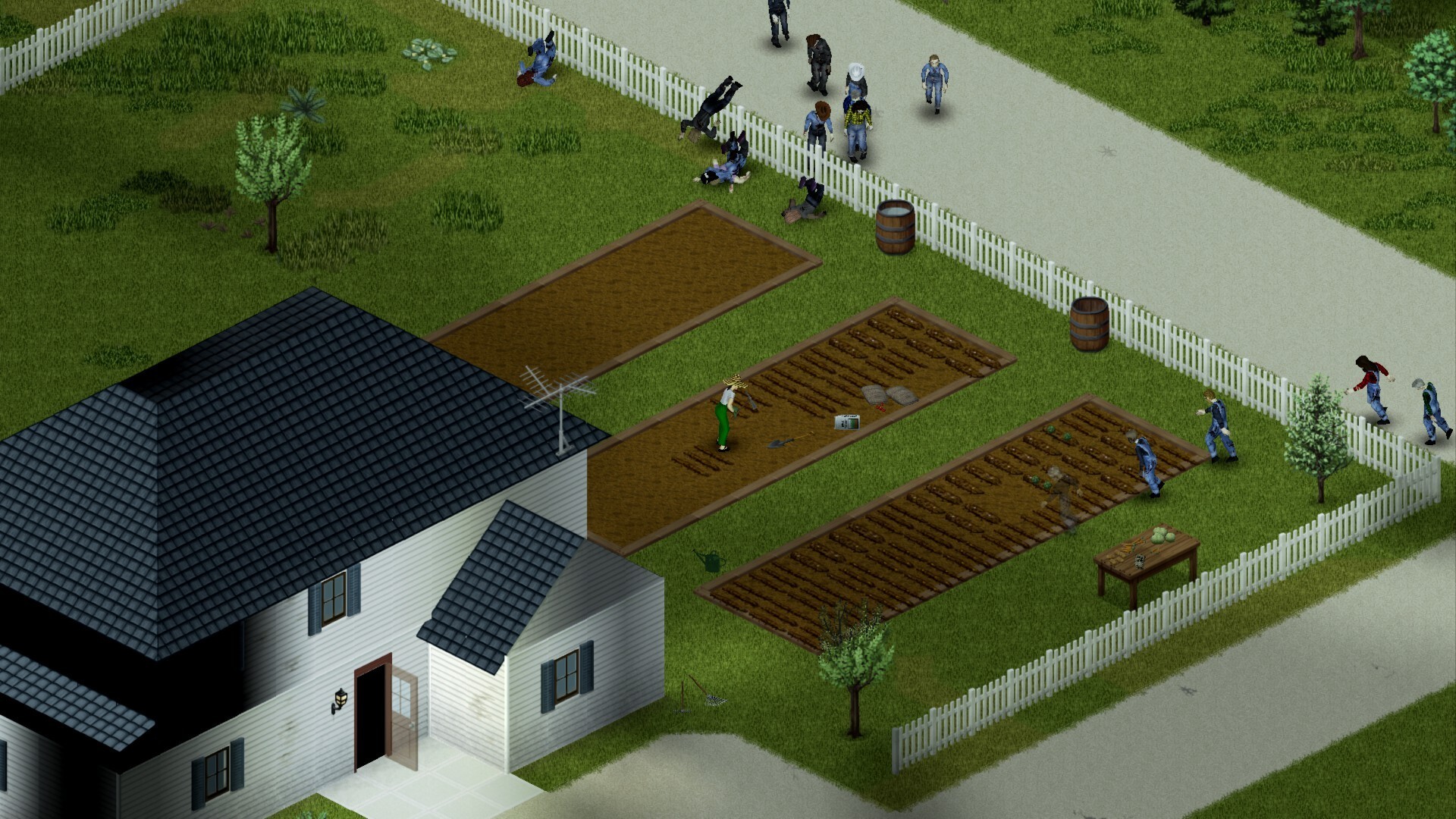
Looted food runs out. A run that intends to last must transition to renewable food: farming, fishing, trapping, foraging and — in Build 42 — animal husbandry. The day you stop depending on cans is the day the run becomes genuinely stable.
Renewable Resources
Water from rain collectors, food from the farm, planks from a sustainable cutting routine, and a base layout that does not need constant repair. Build systems, not stockpiles. A stockpile is a countdown timer; a system is a survivor.
Ammo Conservation
Firearms are finite. Treat every round as irreplaceable. Late-game survival runs almost entirely on melee, with guns reserved for emergencies — a horde at the base, a helicopter event gone wrong, a rescue. Burning ammo on routine clearing is borrowing against a debt you cannot repay.
Base Migration
Sometimes the smart move is to abandon a base. Loot in the surrounding area gets exhausted, a horde event reshapes the neighbourhood, or you simply outgrow the original spot. Plan migrations deliberately — scout the destination, move in stages, and never burn the old base until the new one is genuinely livable.
“The helicopter event punishes players who settle too early and too loudly.”